
Breast Cancer - Symptoms, Causes and Treatment
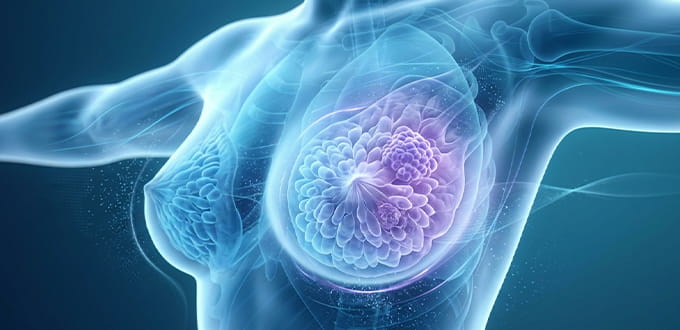
Breast cancer is the second most common cancer among women in India. Studies suggest that about 1 in every 20 women may develop breast cancer at some point in their lifetime. It is a type of malignant tumor that begins in the cells of the breast. Although it occurs predominantly in women, men can also develop breast cancer.
What Is Breast Cancer?
Breast cancer, like other cancers, develops due to the uncontrolled multiplication of abnormal cells. It usually starts in a limited area of the breast, either in the milk-producing glands (lobules) or in the ducts that carry milk to the nipple. Over time, the cancer may increase in size and spread to other parts of the body through the bloodstream or lymphatic system, affecting nearby lymph nodes, the chest wall, or the skin around the breast.
Breast cancer includes several types, each differing in how quickly they grow and spread. Some forms progress slowly over years, while others are aggressive and spread rapidly.
Types of Breast Cancer
- Ductal carcinoma in situ (DCIS)
- Lobular carcinoma in situ (LCIS)
- Invasive lobular carcinoma
- Inflammatory breast cancer
- Angiosarcoma
- Paget’s disease of the breast
- Male breast cancer
- Recurrent breast cancer
Common Signs and Symptoms
Breast cancer may cause noticeable changes in the breast, including:
- A lump or thickening in the breast or underarm, often firm, irregular, and fixed to underlying tissue or skin
- Changes in the size or shape of the breast
- Skin dimpling or puckering, giving an “orange peel” (peau d’orange) appearance
- Inward turning of the nipple
- Nipple discharge, especially if bloody or persistent
- Redness, scaling, or swelling of the breast skin
Risk Factors
Major Risk Factors
- Age: Risk increases as women grow older
- Gender: Women are at higher risk, though men can also be affected
- Family history: Having close relatives (mother, sister, or daughter) with breast cancer raises risk
- Postmenopausal hormone therapy: Long-term use increases risk, which reduces after stopping treatment
Other Contributing Factors
- Not having children
- Not breastfeeding
- Obesity
- Smoking and alcohol consumption
Diagnostic Tests
Breast cancer can be detected using the following investigations:
- Fine Needle Aspiration Cytology (FNAC)
- Core needle biopsy
- Mammography
- Ultrasonography
- Magnetic Resonance Imaging (MRI)
Importance of Early Detection
Detecting breast cancer early significantly improves treatment outcomes. Regular self-breast examinations, mammograms, and routine health screenings can help identify cancer at an early stage, potentially saving many lives each year.
Treatment Options
Treatment depends on the size, location, and stage of the tumor, as well as the patient’s overall health. Common treatment methods include:
- Surgery
- Chemotherapy
- Radiotherapy
- Hormone therapy
Surgical Approaches
Breast-conserving surgery:
The tumor is removed along with a margin of healthy tissue, and lymph nodes in the armpit may be cleared. This is usually followed by radiotherapy.
Mastectomy:
If the entire breast is removed, patients may opt for breast reconstruction, using their own tissue or implants.
Prevention and Lifestyle Changes
Although breast cancer cannot be completely prevented, certain lifestyle habits can reduce risk:
- Limiting alcohol intake
- Eating a balanced diet rich in fruits and vegetables
- Maintaining a healthy body weight
- Engaging in regular physical activity
For women at very high risk, preventive surgery may be considered after thorough genetic testing and medical consultation.
Outlook and Survival
With appropriate treatment, women diagnosed at stage 0 or stage 1 breast cancer have nearly a 100% five-year survival rate. However, when diagnosed at stage 4, the five-year survival rate drops to about 22%.
Final Note
Early detection remains the most crucial factor in improving survival. Regular screening and timely medical consultation can help detect breast cancer at an early, more treatable stage. Women are encouraged to discuss suitable screening options with their healthcare provider.