Extracorporeal Membrane Oxygenation (ECMO) System
Overview
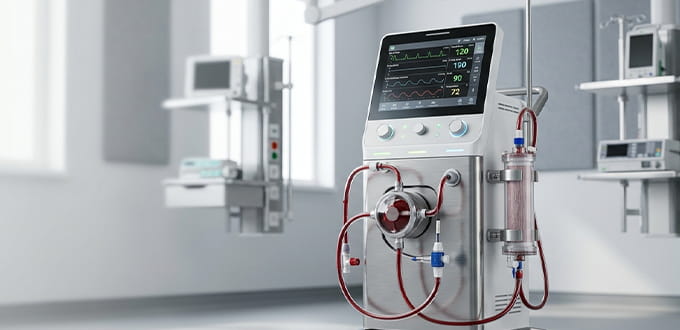
Extracorporeal Membrane Oxygenation (ECMO) is an advanced life-support technique designed to assist patients whose heart and/or lungs are unable to function effectively. Commonly used in intensive care units, ECMO plays a crucial role in managing severe cardiac or respiratory failure. By temporarily taking over the work of the heart and lungs, the ECMO system allows these vital organs time to rest and recover.
The system functions by circulating the patient’s blood through an external circuit. Blood is pumped into an artificial lung, where carbon dioxide is removed and oxygen is infused, before being returned to the body. This process closely replicates the natural actions of the heart and lungs, ensuring continued oxygen delivery to essential organs.
At VishwaRaj Hospital, ECMO is utilized as part of comprehensive critical care services for patients facing life-threatening conditions.
Purpose
The primary goal of ECMO therapy is to provide short-term cardiac and/or respiratory support for patients who do not respond adequately to standard treatments such as mechanical ventilation or medication.
Key Benefits for Patients
- Life-Saving Intervention: ECMO offers critical support in extreme medical emergencies when other therapies are unsuccessful.
- Bridge to Recovery or Transplant: It allows time for organ healing or serves as support while patients await advanced treatments, including transplantation.
- Enhanced Oxygen Delivery: ECMO maintains oxygen levels in the blood, protecting vital organs from damage caused by low oxygen levels.
Unique Solutions Offered
ECMO is especially beneficial for patients with complex and severe conditions such as acute respiratory distress syndrome (ARDS), severe pneumonia, cardiogenic shock, or post-surgical cardiac complications. Its ability to support both heart and lung function makes it a versatile and powerful tool in critical care.
Key Features
The ECMO system incorporates several advanced features to ensure safety and effectiveness:
- Dual Support Capability: Provides assistance to the heart, lungs, or both, depending on patient needs.
- Adjustable Parameters: Blood flow, oxygenation, and carbon dioxide removal can be customized for each patient.
- Continuous Monitoring: Real-time tracking of blood gases, pressures, and flow rates ensures optimal performance and patient safety.
Technical Advantages
ECMO delivers high-efficiency oxygenation and carbon dioxide removal, which is essential for patients with severe respiratory failure. The system is engineered to minimize blood damage, reducing complications such as hemolysis and clot formation.
Clinical Applications
ECMO is commonly used in the following situations:
- Acute Respiratory Distress Syndrome (ARDS): Supports oxygenation while allowing lung recovery
- Cardiogenic Shock: Assists circulation when the heart is unable to pump effectively
- Post-Cardiac Surgery Care: Provides temporary support after complex heart procedures
Patients Who May Benefit
Candidates for ECMO typically include critically ill patients with severe heart or lung failure who have not improved with conventional therapies. This may include patients with advanced infections, heart failure, or those awaiting organ transplantation.
How the ECMO System Works
The ECMO process involves several key steps:
- Cannulation: Tubes are placed into large blood vessels to draw blood from the body
- Blood Circulation: A mechanical pump moves blood through the ECMO circuit
- Gas Exchange: The membrane oxygenator removes carbon dioxide and adds oxygen
- Blood Return: Oxygen-rich blood is delivered back to the patient’s body
Technology Features
Modern ECMO systems at VishwaRaj Hospital include:
- Automated Monitoring: Real-time data on blood flow, oxygen saturation, and patient vitals
- Biocompatible Circuits: Materials designed to reduce clotting and inflammatory responses
Patient Benefits
ECMO therapy provides several advantages:
- Less Invasive Alternative: While cannulation is required, ECMO avoids more extensive surgical interventions
- Lower Risk of Lung Injury: Compared to prolonged mechanical ventilation, ECMO reduces ventilator-related damage
- Improved Survival Rates: Clinical studies show better outcomes for selected patients with severe heart or lung failure
- Effective for Complex Conditions: Suitable for patients with multi-organ failure or high surgical risk
Frequently Asked Questions (FAQs)
1. How does the ECMO system work?
ECMO removes blood from the body, oxygenates it using an artificial lung, and returns it to circulation, supporting heart and lung function.
2. Who can receive ECMO treatment?
Patients with severe cardiac or respiratory failure who do not respond to standard treatments may be considered after careful medical evaluation.
3. Is ECMO painful?
Patients are usually sedated during cannulation and treatment, minimizing discomfort.
4. How long does ECMO treatment last?
Duration varies depending on the patient’s condition and recovery, ranging from a few days to several weeks.
5. What are the possible risks?
Potential risks include bleeding, infection, and cannulation-related complications, all of which are closely monitored.
6. Is ECMO given in sessions?
No, ECMO provides continuous support until the patient improves or another treatment option becomes available.
7. When will results be noticeable?
Improvement timelines differ; some patients respond quickly, while others require extended support.
8. Can children receive ECMO?
Yes, ECMO is safely used in infants and children by specially trained pediatric ECMO teams.
9. What happens after ECMO is stopped?
Patients are gradually weaned off ECMO, followed by rehabilitation and ongoing medical care.
10. Is ECMO a permanent treatment?
No, ECMO is a temporary support system intended to aid recovery or bridge patients to further treatment.