
Chronic Kidney Disease (CKD): Symptoms, Causes, and Management
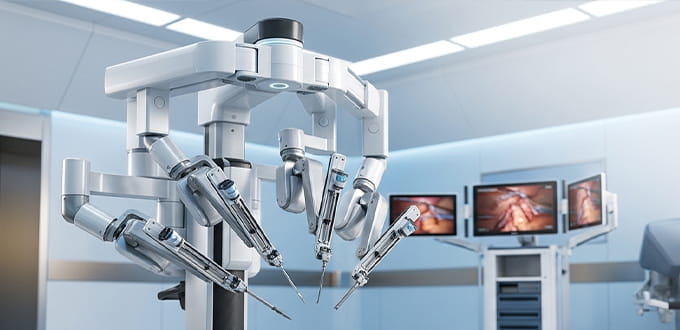
Advanced Minimally Invasive Surgery at VishwaRaj Hospital
If you’ve been diagnosed with a condition that requires surgery, your choices traditionally included open surgery—with large incisions and longer recovery—or laparoscopy, which uses smaller incisions but is often limited to less complex procedures.
Today, advances in surgical technology have introduced a new era of care. Robot-assisted surgery using the da Vinci Surgical System offers a highly precise, minimally invasive option for many complex procedures that previously required open surgery.
At VishwaRaj Hospital, surgeons use the da Vinci Robotic System to perform major surgeries through tiny incisions—combining the effectiveness of definitive surgical treatment with significantly less pain, quicker recovery, and shorter hospital stays.
Why da Vinci Robotic Surgery?
- High-definition, 3D visualization for superior precision
- Enhanced surgical control and accuracy
- Minimal disruption to surrounding healthy tissue
Patients often experience faster healing, reduced discomfort, and an earlier return to daily activities compared to conventional surgical methods.
Specialties & Conditions Treated
Urology
- Prostate, bladder, and kidney cancers
- Ureteropelvic junction obstruction
- Congenital urological anomalies
- Vesico-ureteric reflux disease
Gynaecology
- Multiple uterine fibroids
- Uterine and cervical cancers
- Uterine and vaginal prolapse
- Endometriosis
- Vesico-vaginal fistula
- Ovarian cysts
Cardiology
- Atrial septal defects
- Mitral and aortic valve disorders
- Coronary artery disease
Gastroenterology & Hepatology
- Liver disorders
- Colon and rectal cancers
- Obesity and metabolic conditions
- Gastric cancer
- Esophageal disorders
Key Benefits of Robotic Surgery
- Faster recovery and shorter hospital stay
- Lower risk of wound infection
- Minimal blood loss
- Smaller, less noticeable scars
- Improved long-term weight management
- Resolution or improvement of associated medical conditions
- Enhanced cancer control outcomes
- Better preservation of healthy tissue
- Earlier return of urinary continence
- Faster recovery of sexual function