
3D Neuro-Navigation System
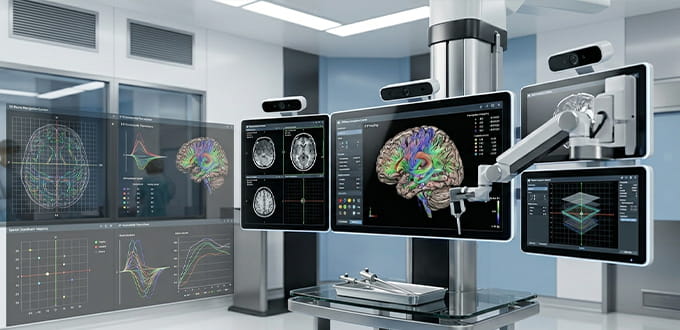
In neurosurgery, accuracy can make all the difference. The introduction of the 3D Neuro-Navigation System has significantly advanced the way complex brain and spine surgeries are performed. This state-of-the-art technology combines high-resolution imaging with real-time surgical guidance, offering surgeons a precise three-dimensional view of a patient’s anatomy throughout the procedure.
By using pre-surgical imaging such as MRI or CT scans, the system generates a detailed 3D map of the brain or spinal structures. During surgery, this model acts as a navigation guide, helping surgeons maneuver safely around vital areas. The system’s real-time feedback allows adjustments to be made instantly, tailored to the patient’s unique anatomy.
Purpose
The primary goal of the 3D Neuro-Navigation System is to improve surgical accuracy and patient safety. By offering a clear and comprehensive visualization of the operative field, it reduces risks, enhances precision, and contributes to better clinical outcomes.
Key Benefits for Patients
- Enhanced Accuracy: Precise localization of tumors or lesions helps preserve healthy tissue.
- Faster Recovery: Minimally invasive approaches often result in shorter hospital stays.
- Reduced Complications: Clear visualization helps protect critical brain and spinal structures.
Unique Solutions
The system is especially valuable in complex neurosurgical cases, including deeply located tumors and intricate vascular abnormalities. By serving as a detailed roadmap, it allows surgeons to plan and execute personalized surgical strategies for optimal results.
Key Features
The 3D Neuro-Navigation System includes advanced capabilities such as:
- Real-Time Imaging: Continuous visualization during surgery.
- 3D Anatomical Mapping: Detailed reconstruction of the patient’s brain or spine.
- Intuitive Interface: Easy-to-use design for efficient surgical workflow.
- Instrument Tracking: Synchronization with surgical tools for accurate positioning.
Patient Advantages
These advanced features lead to greater surgical precision, reduced tissue damage, and improved recovery outcomes, making the system an essential component of modern neurosurgical care.
Clinical Applications
The 3D Neuro-Navigation System is widely used in procedures such as:
- Brain Tumor Surgery: Accurate removal while preserving healthy tissue
- Epilepsy Surgery: Precise identification and treatment of seizure-causing areas
- Spinal Procedures: Safe and accurate placement of implants during spinal surgeries
Patients Who May Benefit
Individuals with brain tumors, spinal disorders, vascular malformations, epilepsy, or chronic neurological pain can benefit greatly from this technology. Its customizable approach makes it suitable for both routine and highly complex cases.
How the System Works
- Pre-Surgical Imaging: High-resolution MRI or CT scans are obtained.
- Data Processing: Images are converted into a detailed 3D anatomical model.
- Surgical Planning: Surgeons map out the safest and most effective approach.
- Live Navigation: Real-time guidance during surgery ensures precision and flexibility.
This integrated process allows surgical teams to operate with confidence and clarity.
Additional Patient Benefits
- Minimally Invasive Techniques: Less trauma and quicker healing
- Fewer Side Effects: Reduced damage to surrounding tissues
- Better Long-Term Results: Improved success rates and lower recurrence risks
- Ideal for Complex Anatomy: Customized surgical planning for challenging cases
Frequently Asked Questions (FAQs)
1. What is the 3D Neuro-Navigation System?
It is an advanced surgical guidance system that uses 3D imaging to help surgeons operate with greater accuracy.
2. Who can undergo surgery using this system?
Patients with neurological or spinal conditions such as tumors, epilepsy, or spinal instability.
3. Is the procedure painful?
Most procedures are minimally invasive, and patients usually experience minimal discomfort.
4. How long does surgery take?
Surgical duration varies but is often shorter due to improved efficiency and precision.
5. Are there any risks?
Risks are significantly reduced, though mild swelling or temporary discomfort may occur.
6. Will I need multiple procedures?
Some patients need only one surgery, while others may require follow-up treatment.
7. When will results be noticeable?
Improvements are often seen soon after surgery, with full recovery over time.
8. Is this technology safe?
Yes, it is designed to enhance safety and reduce surgical risks.
9. Can it be used for spinal surgery?
Yes, it is highly effective for spinal procedures, including screw and implant placement.
10. Where can I receive treatment using this system?
Advanced neurosurgical centers such as VishwaRaj Hospital offer this technology.