LINAC (Linear Accelerator) Radiation Therapy System
Overview
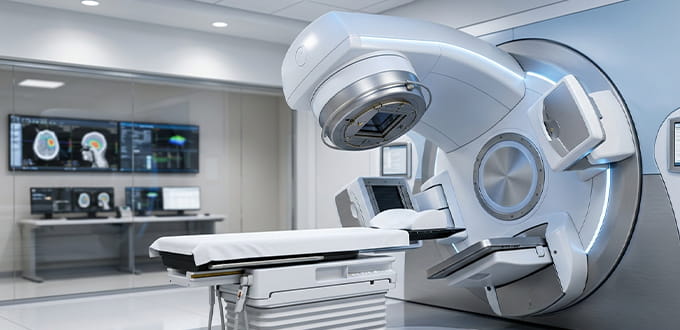
In modern cancer care, the LINAC (Linear Accelerator) Radiation Therapy System plays a vital role in delivering highly accurate radiation treatments. This advanced technology uses high-energy X-rays or electron beams to destroy cancer cells while carefully protecting nearby healthy tissues. Because of its precision, adaptability, and safety, LINAC-based radiation therapy has become a cornerstone of oncology services at leading centers such as VishwaRaj Hospital, helping improve treatment outcomes and patient quality of life.
How LINAC Works
A LINAC system functions by accelerating electrons to extremely high speeds. These electrons interact with a target to generate powerful radiation beams that are precisely directed at tumors. Advanced imaging systems built into the machine allow clinicians to view the tumor and surrounding organs in real time. This ensures accurate targeting throughout the treatment session, setting LINAC apart from conventional radiation techniques.
Purpose of LINAC Radiation Therapy
The main goal of the LINAC Radiation Therapy System is to treat cancer by delivering focused radiation directly to tumors. It is especially effective for localized cancers, where it can reduce or eliminate tumors while minimizing harm to normal tissues.
Key Benefits for Patients
- High Precision – Radiation is delivered with exceptional accuracy, reducing exposure to healthy organs.
- Non-Surgical Approach – As a non-invasive treatment, LINAC therapy avoids surgical risks and long recovery times.
- Time-Efficient Sessions – Many treatments are completed within minutes.
- Wide Treatment Range – Suitable for treating various cancers, including breast, lung, brain, and prostate cancers.
Advanced Solutions and Technologies
LINAC systems integrate advanced techniques such as Intensity-Modulated Radiation Therapy (IMRT) and Image-Guided Radiation Therapy (IGRT). These innovations allow radiation doses to be customized according to the size, shape, and location of each tumor, resulting in more personalized and effective treatment plans.
Key Features of the LINAC System
- Real-Time Imaging – Continuous imaging ensures accurate tumor targeting during treatment.
- Dose Modulation – IMRT enables varying radiation intensities across different tumor regions.
- Accurate Patient Positioning – Specialized positioning systems maintain consistent alignment in every session.
- Automated Planning Software – Advanced planning tools help clinicians design individualized treatment protocols.
Technical Advantages
LINAC technology allows for the delivery of high radiation doses with remarkable precision. This makes it ideal for treating complex tumors located near critical organs, where traditional radiation methods may pose greater risks.
Clinical Applications
LINAC Radiation Therapy is commonly used in the treatment of:
- Breast Cancer – Helps lower the risk of recurrence following surgery
- Lung Cancer – Effectively treats lung tumors, even in patients with limited lung capacity
- Prostate Cancer – Enables precise high-dose radiation with fewer side effects
- Brain Tumors – Supports stereotactic radiosurgery for targeted, high-dose treatment with minimal impact on healthy brain tissue
Patients Who Can Benefit
LINAC therapy is suitable for patients with localized tumors, those who are not candidates for surgery, individuals requiring tumor reduction before surgery, and patients with recurrent cancers. A specialist evaluation is essential to determine the best treatment approach.
Step-by-Step Treatment Process
- Electron Acceleration – Electrons are accelerated using microwave technology to generate high-energy radiation.
- Beam Shaping – The radiation beam is shaped to match the tumor’s exact contours.
- Live Imaging – Tumor movement is monitored in real time to ensure accurate delivery.
- Fractionated Treatment – Radiation is delivered in multiple sessions, allowing healthy tissues time to recover.
Patient Benefits
- Non-Invasive Care – No surgical incisions or hospital stays required
- Fewer Side Effects – Reduced exposure to healthy tissues lowers treatment-related discomfort
- Better Treatment Results – Improved tumor control and survival rates in many cases
- Ideal for Complex Tumors – Safe treatment for cancers near sensitive organs
Frequently Asked Questions (FAQs)
1. How does the LINAC Radiation Therapy System work?
It accelerates electrons to create high-energy radiation beams that precisely target cancer cells, guided by advanced imaging systems.
2. Who is eligible for LINAC treatment?
Patients with localized tumors, those unable to undergo surgery, or individuals needing pre-surgical tumor reduction may be eligible, subject to oncologist evaluation.
3. Is LINAC therapy painful?
No. The treatment is painless and non-invasive. Some patients may feel mild discomfort from remaining still.
4. How long does each session take?
Sessions typically last 15–30 minutes, with only a few minutes dedicated to radiation delivery.
5. What side effects can occur?
Possible side effects include fatigue, mild skin irritation, or nausea, usually less severe than traditional radiation therapy.
6. How many sessions are required?
Treatment plans vary but generally range from 5 to 40 sessions over several weeks.
7. When will results be noticeable?
Initial effects may appear within weeks, while full results can take several months.
8. Can LINAC treat all cancers?
LINAC is effective for many cancers, but suitability depends on tumor type, size, and location.
9. Is preparation needed before treatment?
Yes. Patients may receive instructions related to diet, medications, or lifestyle prior to therapy.
10. What happens during the first visit?
The first appointment includes evaluation, imaging, treatment planning, and a detailed explanation of the therapy process by the medical team at VishwaRaj Hospital.