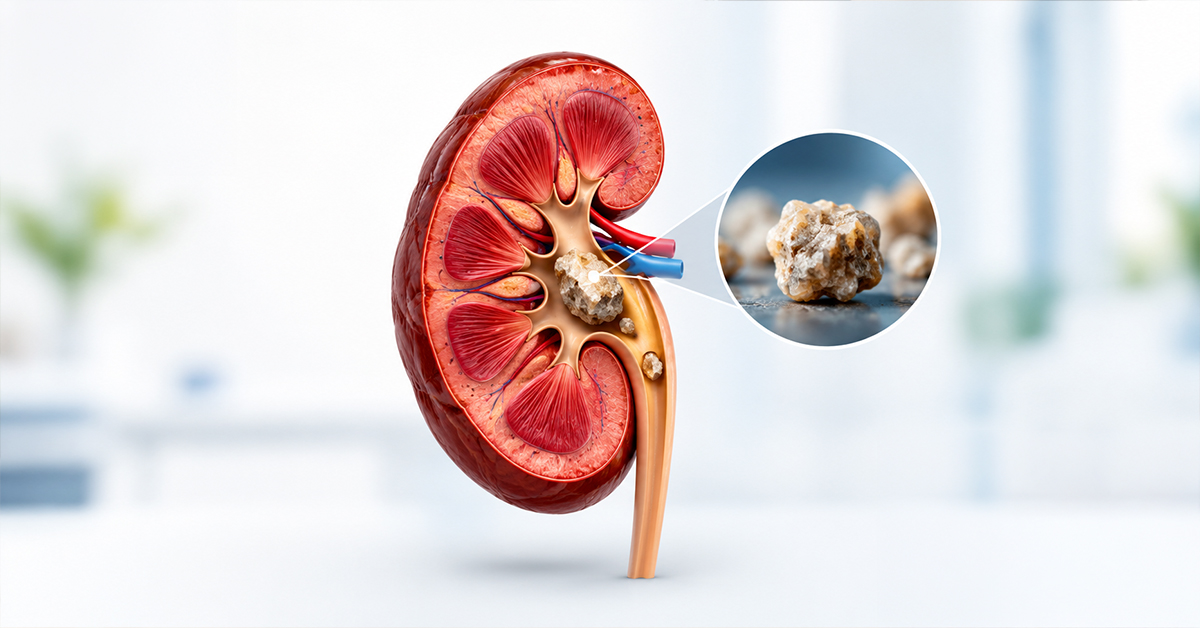
Kidney stones are a common urinary tract condition that can cause severe pain and discomfort if left untreated. They develop when minerals and salts in the urine form hard deposits inside the kidneys. Depending on their size and location, kidney stones may pass naturally or require medical intervention. Understanding the kidney stones causes and symptoms, available treatments, and preventive measures can help you protect your kidney health.
At VishwaRaj Hospital, Pune, patients can consult experienced medical specialists for kidney stone evaluation, diagnosis, and personalised treatment based on their condition.
What Are the Symptoms of Kidney Stones?
The symptoms of kidney stones can vary depending on their size and whether they block the flow of urine. Small stones may not cause noticeable symptoms, while larger stones can lead to significant discomfort.
Common kidney stone symptoms include:
- Severe pain in the back, side, lower abdomen, or groin.
- Sharp or cramping pain that comes in waves.
- Blood in the urine, making it appear pink, red, or brown.
- Frequent urination or a persistent urge to urinate.
- Pain or burning sensation while urinating.
- Nausea and vomiting.
- Cloudy or foul-smelling urine.
These kidney stones pain symptoms may become more intense as a stone moves through the urinary tract. Fever and chills, especially with urinary symptoms, may indicate an infection and require urgent medical attention.
What Are the Causes of Kidney Stones?
Understanding the causes of kidney stones is essential for effective treatment and prevention. Kidney stones form when urine contains high concentrations of certain substances, such as calcium, oxalate, or uric acid, allowing crystals to develop.
Common risk factors include:
- Dehydration: Drinking insufficient water makes urine more concentrated.
- Dietary habits: Excessive salt intake and certain dietary patterns may increase stone risk.
- Family history: Kidney stones can run in families.
- Medical conditions: Obesity, recurrent urinary infections, and certain metabolic disorders can increase the risk.
- Medications: Some medicines and supplements may contribute to stone formation.
Identifying the underlying cause helps doctors recommend suitable treatment and long-term preventive strategies.
What Are the Types of Kidney Stones?
There are different types of kidney stones, classified according to their chemical composition:
- Calcium stones: The most common type, often containing calcium oxalate.
- Uric acid stones: May develop when urine is persistently acidic.
- Struvite stones: Often associated with certain urinary tract infections.
- Cystine stones: Rare stones associated with an inherited condition called cystinuria.
Knowing the stone type can help determine the most appropriate treatment and dietary recommendations.
How Is Kidney Stone Diagnosis Performed?
Kidney stone diagnosis involves evaluating symptoms, medical history, and appropriate investigations. A doctor may recommend urine tests to identify infection or mineral abnormalities and blood tests to assess kidney function.
Imaging tests, including ultrasound or CT scans when appropriate, help determine the stone’s size, location, and whether it is obstructing urine flow. In some cases, laboratory analysis of a passed or removed stone may help identify its composition.
What Are the Available Kidney Stone Treatment Options?
Kidney stone treatment depends on the stone’s size, location, composition, symptoms, and the patient’s overall health.
Small stones may pass naturally with appropriate hydration, pain management, and medical supervision. Selected patients may also benefit from medicines that help certain stones pass more easily.
Kidney Stone Treatment Without Surgery
Kidney stone treatment without surgery may be suitable for selected small stones that are likely to pass naturally. Doctors may recommend observation, prescribed pain relief, and medicines when appropriate. Some stones can also be treated using extracorporeal shock wave lithotripsy (ESWL), which uses sound waves to break stones into smaller fragments without an incision.
Kidney Stone Removal Treatment
Larger stones, persistent obstruction, severe symptoms, or stones unlikely to pass naturally may require a procedure. Options include ureteroscopy, laser stone fragmentation, and percutaneous nephrolithotomy (PCNL) for selected large or complex stones. Infected urinary obstruction requires urgent medical treatment and drainage.
How to Prevent Kidney Stones
Knowing how to prevent kidney stones can reduce the risk of recurrence. Helpful measures include:
- Drink enough water throughout the day, unless your doctor has advised fluid restriction.
- Reduce excessive salt consumption.
- Maintain a balanced diet and a healthy body weight.
- Avoid unnecessary high-dose supplements.
- Follow personalised dietary advice based on your stone type and medical history.
Consult a Kidney Stone Specialist at VishwaRaj Hospital, Pune
Early evaluation can help prevent complications and identify the most appropriate treatment. If you experience recurring pain, blood in your urine, or difficulty urinating, consult a qualified kidney stone specialist.
For those seeking kidney stone treatment in Pune, VishwaRaj Hospital offers medical evaluation and treatment planning for kidney stone conditions. The treatment approach is tailored to each patient’s needs, with the goal of relieving symptoms, preserving kidney function, and reducing recurrence.
Book an appointment with VishwaRaj Hospital to discuss your symptoms and available treatment options.
Hospital: VishwaRaj Hospital, Near Loni Railway Station, Loni Kalbhor, Pune–Solapur Road, Pune – 412201
Website: https://vishwarajhospital.com/
Contact: +91 88866 06060